Wednesday, February 13, 2013

Delicious Healthy Snacking


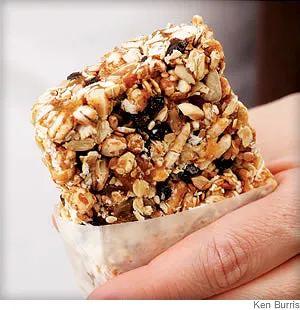
Great for breakfast on the go! Golden roasted nuts, seeds and oats are enveloped by flavorful almond butter in these delectably chewy, no-fuss energy bars. Unrefined turbinado sugar adds a deep caramelly undertone. Feel free to use light brown sugar instead. Bars stored at room temperature will be softer than those that are refrigerated.


 Ingredients
Prep: 30 | Total Time: 60
  • 1 cup
    old-fashioned rolled oats
  • 1/4 cup
    slivered almonds
  • 1/4 cup
    sunflower seeds
  • 1 tablespoon
    flaxseeds, preferably golden
  • 1 tablespoon
    sesame seeds
  • 1 cup
    unsweetened whole-grain puffed cereal
  • 1/3 cup
    currants
  • 1/3 cup
    dried apricots, chopped
  • 1/3 cup
    golden raisins, chopped
  • 1/4 cup
    creamy almond butter
  • 1/4 cup
    turbinado sugar
  • 1/4 cup
    honey
  • 1/2 teaspoon
    vanilla extract
  • 1/8 teaspoon
    salt
 Instructions
  1. Preheat oven to 350°F. Coat an 8-inch-square pan with cooking spray.
  2. Spread oats, almonds, sunflower seeds, flaxseeds and sesame seeds on a large, rimmed baking sheet. Bake until the oats are lightly toasted and the nuts are fragrant, shaking the pan halfway through, about 10 minutes. Transfer to a large bowl. Add cereal, currants, apricots and raisins; toss to combine.
  3. Combine almond butter, sugar, honey, vanilla and salt in a small saucepan. Heat over medium-low, stirring frequently, until the mixture bubbles lightly, 2 to 5 minutes.
  4. Immediately pour the almond butter mixture over the dry ingredients and mix with a spoon or spatula until no dry spots remain. Transfer to the prepared pan. Lightly coat your hands with cooking spray and press the mixture down firmly to make an even layer (wait until the mixture cools slightly if necessary). Refrigerate until firm, about 30 minutes; cut into 8 bars.

Tuesday, February 12, 2013

Banana Pudding Vi- Shake


  •  2 Scoops Visalus Shake Mix
  •  4-6  Ice Cubes
  •  6-8  Low Fat Vanilla Wafers
  •  8 fl. oz. Milk
  •  2 tbsp. Sugar Free Vanilla Pudding Mix
  • 1/2  Frozen Banana, sliced
  •  Banana Flavored Shape Up

Benefits of Alternative Medicine


For nearly 3000 years oriental cultures have harnessed the natural power of the earth to live healthier, happier, and more youthful lives. Today, there is a reemergence in the use of herbal supplements among American consumers. Many people are looking for new ways to improve their health, and they are often turning to natural remedies rather than pharmaceutical drugs.

A Few Common Herbal Supplements and Uses:

St. John’s Wort - Wild-growing with yellow flowers, this herb has been used for centuries in the treatment of mental disorders. Today, it is popular for mild to moderate depression.

Saw Palmetto - Saw palmetto may be helpful in the treatment of an enlarged prostate, a common condition in men over age 50.

Hawthorn - Popularly used for several heart-related conditions and is supportive in the treatment of angina, atherosclerosis, congestive heart failure, and high blood pressure.

Green tea - This herb is used to combat fatigue, prevent arteriosclerosis and certain cancers, lower cholesterol, reduce tooth decay, and aid in weight loss.

Goldenseal - This herb, native to America, is popular for its healing properties and antiseptic, or germ-stopping, qualities. Often used for colds and flu, it is also popular for soothing the nose lining when it is inflamed or sore.

Ginseng - Used as a general tonic to increase overall body tone, ginseng is considered helpful in elevating energy levels and resistance to stress.

Gingko Biloba - This herb is used for many conditions associated with aging, including poor circulation and memory loss.

Black Cohosh - This shrub-like plant of eastern North America derives its name from the Native American word for “rough” (referring to its root structure). It is generally used for alleviating menopausal conditions, painful menstruation, uterine spasms, and vaginitis.

Echinacea - Often used to strengthen the body’s immune system, echinacea is also considered prevention against colds and flu. This US native plant is also called the purple coneflower.

Evening Primrose - Oil from this night-blooming, bright yellow flowering plant may be helpful in reducing symptoms of arthritis, premenstrual syndrome (PMS), and cardiovascular disease, as well as hyperactivity in children.

Feverfew - The pain-relieving properties of feverfew have been used for migraine headaches, as well as for menstrual cramps.

Garlic - generally used for cardiovascular conditions, including high cholesterol and triglyceride levels associated with the risk of atherosclerosis, a disorder of the arteries caused by cholesterol and plaque deposits in the artery walls. It is also helpful in preventing colds, flu, and other infectious diseases.

Herbal supplements come in all forms: dried, chopped, powdered, capsule, or liquid, and can be used in various ways, including:

  • Swallowed as pills
  • Brewed as tea
  • Applied to the skin as gels
  • Added to bath water


Before Taking Herbal Supplements:

  1. Educate yourself. Learn as much as you can about the herbs you are taking by consulting your physician and contacting herbal supplement manufacturers for information.
  2. Follow the label instructions carefully and only use the prescribed dosage. Never exceed the recommended dosage, and seek out information about contraindications.
  3. Watch for side effects, such as nausea, dizziness, headache, or upset stomach. If such symptoms occur, reduce the dosage or stop taking the herbal supplement.
  4. Be alert for allergic reactions. A severe allergic reaction can cause difficulty breathing. If such a problem occurs, call 911 or the emergency number in your area for help.
  5. Research the company whose herbs you are taking. All herbal supplements are not created equal, and it is best to choose a reputable manufacturer’s brand.


Currently, the FDA does not regulate herbal supplements, it is best to consult with your physician or a certified herbalist before starting an herbal regiment.

For more herbs described above that is generated in a combo pack please visit http://FontaineofLife.myvi.net

Essential Nutrients


Did you ever wonder where your energy comes from, and how it is derived from the foods you eat? The truth is, we get energy from carbohydrates, fats and protein, and when you go on restrictive diets, you short-change some systems in your body, and short-change your health.
Humans require food substances to supply the components necessary to build tissues, to repair tissues as they wear out and die, to keep the body in good working condition, and to supply fuel for energy. A well-balanced diet is one that provides an adequate amount of each of the classes of nutrients each day, furnishing at the same time an adequate but not excessive number of calories for the body’s energy needs. Children require relatively larger amounts of nutrients and calories because of their rapid growth. The foods required for proper nutrition fall roughly into three major groups: proteins, carbohydrates, and fats.

Carbohydrates are the human body’s key source of energy, providing 4 calories of energy per gram. When carbohydrates are broken down by the body, the sugar glucose is produced; glucose is critical to help maintain tissue protein, metabolize fat, and fuel the central nervous system.

Glucose is absorbed into the bloodstream through the intestinal wall. Some of this glucose goes straight to work in our brain cells and red blood cells, while the rest makes its way to the liver and muscles, where it is stored as glycogen (animal starch), and to fat cells where it is stored as fat. Glycogen is the body’s auxiliary energy source, tapped and converted back into glucose when we need more energy.

Starches and sugars are the major carbohydrates. Common starch foods include whole-grain breads and cereals, pasta, corn, beans, peas, and potatoes. Naturally occurring sugars are found in fruits and many vegetables; milk products; and honey, maple sugar, and sugar cane. Foods that contain starches and naturally occurring sugars are referred to as complex carbohydrates, because their molecular complexity requires our bodies to break them down into a simpler form to obtain the much-needed fuel — glucose. Our bodies digest and absorb complex carbohydrates at a rate that helps maintain the healthful levels of glucose already in the blood.
In contrast, simple sugars, refined from naturally occurring sugars and added to processed foods, require little digestion and are quickly absorbed by the body, triggering an unhealthy chain of events. The body’s rapid absorption of simple sugars elevates the levels of glucose in the blood, which triggers the release of the hormone, insulin. Insulin reins in the body’s rising glucose levels, but at a price: Glucose levels may fall so low within one to two hours after eating foods high in simple sugars, such as candy, that the body responds by releasing chemicals known as anti-insulin hormones. This surge in chemicals, the aftermath of eating a candy bar, can leave a person feeling irritable and nervous.
Many processed foods not only contain high levels of added simple sugars, they also tend to be high in fat and lacking in the vitamins and minerals found naturally in complex carbohydrates. 

Nutritionists often refer to such processed foods as junk foods and say that they provide only empty calories, meaning they are loaded with calories from sugars and fats but lack the essential nutrients our bodies need. Nutritionists caution that most Americans need to eat more complex carbohydrates. Foods rich in complex carbohydrates, which provide vitamins, minerals, some protein, and dietary fiber and are an abundant energy source, should make up roughly 50 percent of our daily calories.

Fats, which provide 9 calories of energy per gram, are the most concentrated of the energy-producing nutrients, so our bodies need only very small amounts. Fats play an important role in building the membranes that surround our cells and in helping blood to clot. Once digested and absorbed, fats help the body absorb certain vitamins. Fat stored in the body cushions vital organs and protects us from extreme cold and heat.
Fat consists of fatty acids attached to a substance called glycerol. Dietary fats are classified as saturated, monounsaturated, and polyunsaturated according to the structure of their fatty acids. Animal fats – from eggs, dairy products, and meats – are high in saturated fats and cholesterol, a chemical substance found in all animal fat. Vegetable fats – found, for example, in avocados, olives, some nuts, and certain vegetable oils – are rich in monounsaturated and polyunsaturated fat.
High intake of saturated fats can be unhealthy. While we need cholesterol, we do not need it in our diet. The liver, and to a lesser extent the small intestine, manufacture all the cholesterol we require. When we eat cholesterol from foods that contain saturated fatty acids, we increase the level of a cholesterol-carrying substance in our blood that harms our health. Saturated fatty acids – found in foods ranging from beef to ice cream, to mozzarella cheese to doughnuts – should make up no more than 10 percent of a person’s total calorie intake each day. Excessive saturated fats are considered harmful to the heart and blood vessels because they are thought to increase the level of LDLs (the “bad” cholesterol), and decrease the level of HDLs (the “good” cholesterol).
Monounsaturated fats – found in olive, canola, and peanut oils – appear to have the best effect on blood cholesterol, decreasing the level of LDLs and increasing the level of HDLs. Polyunsaturated fats – found in margarine and sunflower, soybean, corn, and safflower oils – are considered more healthful than saturated fats. However, if consumed in excess (more than 10% of daily calories), they can decrease the blood levels of HDLs. Choosing a diet that is low in fat and cholesterol is critical to maintaining health and reducing the risk of life-threatening disease. 

Protein: Although protein provides 4 calories of energy per gram, the body uses protein for energy only if carbohydrate and fat intake is insufficient. When tapped as an energy source, protein is diverted from the many critical functions it performs for our bodies.
Dietary proteins are powerful compounds that build and repair body tissues, from hair and fingernails to muscles. In addition to maintaining the body’s structure, proteins speed up chemical reactions in the body, serve as chemical messengers, fight infection, and transport oxygen from the lungs to the body’s tissues.
Proteins are made up of smaller units called amino acids. Of the more than 20 amino acids our bodies require, eight or nine cannot be made by the body in sufficient quantities to maintain health. These amino acids are considered essential and must be obtained from food. When we eat food high in proteins, the digestive tract breaks this dietary protein into amino acids. Absorbed into the bloodstream and sent to the cells that need them, amino acids then recombine into the functional proteins our bodies need.
Animal proteins, found in such food as eggs, milk, meat, fish, and poultry, are considered complete proteins because they contain all of the essential amino acids our bodies need. Plant proteins, found in vegetables, grains, and beans, lack one or more of the essential amino acids. However, plant proteins can be combined in the diet to provide all of the essential amino acids. A good example is rice and beans. Each of these foods lacks one or more essential amino acids, but the amino acids missing in rice are found in the beans, and vice versa.

Recommended protein daily intake by experts:
  • A three month old infant: 13 g
  • 4 year old child 22 g
  • A healthy woman 45 g
  • A man of average size 57 g
  • A pregnant woman 55 g
  • A breast-feeding mother 65 g


Illness and stress place an enormous demand on the body as it builds tissue or fights infection, and these conditions require an increase in protein consumption.
Good nutrition is reflected not only in the growth, function and energy of the body but also in its appearance. The eyes, skin, hair, and teeth indicate whether body nourishment is good or poor. Poor nutrition may result from excesses in the diet as well as deficiencies; excess of certain vitamins or minerals can produce potentially lethal disease states, and excess of carbohydrates or fat can result in obesity.
Wednesday, February 6, 2013

Chocolate Covered Banana & Cherry Vi Shake


Ingredients:
1/2 c. Frozen Cherries
1  Medium Banana
8 fl. oz. Dark Chocolate Almond Milk
2 Scoops Visalus Shake Mix
5 tbsp. Oatmeal (ground is best)
Directions:
For best results, grind your oatmeal in a coffee grinder or other grinding device. Blend all ingredients together until shake is smooth & thick. The shake will thicken the longer it rests. If using fresh cherries, you may want to add ice.

Enjoy!

3 Heart-Healthy Foods & Nutrients

Considering the fact that heart disease is the leading cause of death in the United States and February is National Heart Health Month, as a Registered Nurse, it was extremely important to share some information with you regarding certain types of foods that are actually healthy for your heart. There are general types of foods, such as Omega-3 fatty acids, while also some more specific types of food such as Ground Flax Seeds. You may actually be surprised at some of the tasty foods that can improve your heart health.
Omega-3 Fatty Acids

In the past, everyone was all about eating a low-fat diet, but these days people have finally realized there are ‘good’ fats (HDL) and ‘bad’ fats (LDL). Well, Omega-3 Fatty Acids are about as good as it gets. The key to Omega-3 fatty acids is that they reduce your low-density lipoprotein cholesterol- also known as ‘bad’ cholesterol. There are a number of ways to consume these acids, such as through fish oil supplements, but getting these nutrients through natural foods such as walnuts, salmon, mackerel, tuna, soybeans, and flax seeds are highly advised.


Folate and Other B vitamins
Folate, B6 and B12 Vitamins are potentially major contributors in reversing the artery-clogging process of atherosclerosis. How do they do they work? Well, these vitamins are able to covert homocysteine into methionine- one of the building blocks that the body uses to build new proteins. To put it simply, homocysteine is a non-protein amino acid that when found in high levels has been linked to cardiovascular disease- so the less the better. A few examples of foods that are high in Folate and B vitamins would be lentils, spinach and tofu.
Fiber-Rich Whole Grains

Just like Omega-3 fatty acids, fiber-rich whole grains are helpers in lowering your low-density lipoprotein (LDL) cholesterol. Not only will whole grains lower your LDL, but they are a great source of energy as well. A few examples of foods that contain fiber-rich whole grains are oat bran, lima beans, black beans and even raspberries! Let’s make an effort to not only eat healthier, but smarter- ‘heart smart’ in this case. 

Happy Heart Health ,

FontaineofLife


Visit http://www.FontaineofLife.myvi.net for more healthier options for your cardiovascular health!


Monday, February 4, 2013

Healthy Supplements


A dietary supplement, also known as food supplement, is a preparation that supplies nutrients such as vitamins, minerals, fatty acids or amino acids that are missing or not consumed in a decent quantity in your daily diet. Dietary supplements also include herbs and botanicals. With the help of our scientists and medical doctors, research shows that ViSalus Vi-Pak has supplemental nutrients that are likely to have great health benefits and helps boost health and potentially lengthen lifespan.

Benefits of the Vi-Pak: Aids our body’s natural energy production, endurance and performance. Support overall immune system function along with stress and tension. Support healthy range of motion and support your body’s recovery process

Many physicians today recognize the importance of taking at least a daily multivitamin. Most agree that our American diet is less than desirable thus receiving less than the daily dietary intake of nutrients. We consume far too much processed food as well as fast foods on a daily basis. When our bodies do not get the nutrients we need, our systems start to break down and illness and disease follow. The human body is amazing. It was designed with the ability to heal itself, and given the proper nutrients, it will. This applies to our daily requirements of all vitamins and minerals, and in the proper amounts. However, in certain health conditions, numerous other supplements can play an important role in restoring and maintaining health.

Whether it be a deficiency in a vitamin or mineral, or the need for more than the recommended daily amount in certain conditions, adding more of the foods that supply them or a supplement is beneficial. Extra nutrients the Vi-Pak offers include but not limited to B vitamins, vitamin C, calcium and extra minerals, and antioxidants like grape seed extract and green tea extract, as well as acetyl-L-carnitine, a biological compound that stimulates antioxidant defenses and alpha lipoic acid that serves to enhance mitochondrial function, support better hearing, and has been used as a therapeutic agent in liver and brain disorders. The amounts of each ingredient have been carefully measured to provide the reported potential benefit.

Modern diets do not contain nearly enough omega-3 fatty acids. Omega-3s are important to heart and brain health and they support healthy joint movement. And there are many other health benefits when this balance is maintained. The best source of omega-3s are cold-water ocean fish, such as sardines, herring, mackerel, albacore tuna and salmon, but if you don’t eat two to three servings of these a week, a quality fish oil supplement is a good alternative. The ViSalus Omega Vitals in the Vi-Pak provides life enhancing oils to support health. Omega Vitals, or Essential Fatty Acids (EFA), are so-named because they are imperative for optimal health, cognitive function and cardiovascular support. These EFA’s function as building blocks for the membranes of every cell in the body. They also produce “prostaglandin families,” which are hormone-like substances necessary for energy metabolism and cardiovascular and immune health. Brain and nerve tissue consist of over 50% EFA’s!

Getting enough antioxidants is another concern for most people. The world we live in is toxic and we daily ingest free radicals from the food we eat, the water we drink and the air we breathe. Supplying our bodies with more antioxidants is beneficial to fight off these free radicals that can cause diseases like cancer. Some vitamins are antioxidants like vitamins E, C and CoQ10, as well as botanicals like green tea, grape skins and seeds, strawberries, blackberries, blueberries and pomegranates. Many antioxidant supplements contain a combination of several of these. Pine Bark is another powerful antioxidant in the Vi- Pak.  In nature, it protects trees from the damaging effects of the sun, weather, and other elements.  In the human body, however, Pine Bark Extract serves to help protect us from damaging oxidation that takes place with our every breath.
There is an herbal remedy for just about any condition. After all, herbs were the very first form of medicine and many have been around for thousands of years. Examples: black cohosh, soy and wild yam to help relieve menopausal symptoms; nettle root promotes virility in men; cinnamon extract benefits diabetes; ginseng promotes energy and cognitive function. These are just a few examples, and they have clinical studies to back them.
Important things to consider:
  • Tell your doctor about any dietary supplements you use
  • Do not take a bigger dose than the label recommends
  • Stop taking it if you have side effects

Based on 25 years of scientific study, including NIH (National Institute of Health) funded research, the Vi-Pak® was created by Dr. Seidman to provide the ultimate health protection. In today’s “insta-society” of fast food and hectic lifestyles, our bodies are paying the price. From processed foods to lack of sleep and high stress, we are fast forwarding the already short amount of time we have on this planet.

The Vi-Pak® uses four unique supplements to provide our bodies with the nutrients needed to operate at peak levels. Combining a Multi Mineral & Vitamin Formula and Supercharged Antioxidant with a patented Anti-Aging & Energy Complex and Omega Vitals Formulation, The Vi-Pak® is an unprecedented system for ultimate health and nutrition. Neatly divided into daily packets, you can not only protect your health with the traditional 1-month supply, but help others feel the benefits with a 3-day sample pack. If you want the most robust blend of ingredients to fuel your body deep in the cells, this is the product for you.

For more information on the Vi-Pak, other products, and information please visit us at http://www.FontaineofLife.myvi.net

Add This *